
What Meditation Actually Does to the Body
The Science and Spirit of Staying Still

You won’t reshape your perspective by intellectualizing your way through every feeling. You may understand the shape of your wounds that way, sure, but understanding is not the same thing as releasing it.
Finding the right words and language can help you name what happened, organize the chaos, and survive the mess, but alone it simply becomes a pretty way to stay a safe distance from the thing that actually hurt you. I’d call that “dissociation.”
And I say all this, with no disrespect to therapy. I’ve had therapists help me clarify, contextualize, and survive things I absolutely needed help surviving. The work — their work — matters. But that clarity alone often only tells you what happened, not where it rests in the body, why it still lives there, or how to properly remove it biomechanically.
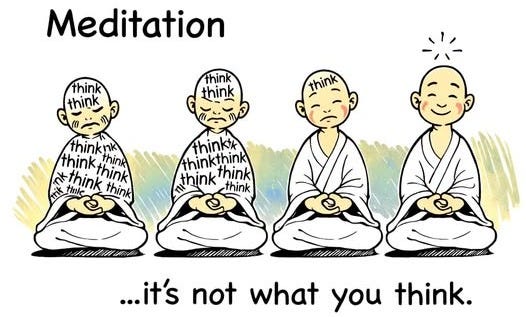
This is where meditation enters this conversation. Not as a performance of calm, and not as a promise of instant transcendence. Instead it is more like a way of sitting still long enough to pull back from your experience to become an Observer over the reactions. A way of becoming that allows the emotions to rise without the necessity of converting them into explanation.
🧾How to read this article
This article is split into two parts on purpose.
The first section uses the language of neuroscience, physiology, and material science, and it is written for the skeptic, the rationalist, or the person who needs the floor to hold before they step onto it.
The second section uses the language of spirituality, symbolism, and inner experience, and it is written for the reader who knows that not everything real arrives with a scan or a chart.
If you don’t know where you fall, read them both and let the gravity and verbiage guide you. There is no right or wrong to eat this Reece’s Peanut Buttercup.
Neither section is meant to replace your own lived experience, either. They’re meant to offer a map that i’ve simply noticed and found a way to expose. Not a perfect map either, or a final one, but one that can help you move toward a more embodied kind of peace.
I need to state two important notes plainly:
Meditation is not always soft. It can be beautiful, yes, but it can also bring up old fear, grief, anger, and pressure you’ve been carrying for years. Sometimes the relief comes with tears. Sometimes it comes with discomfort first. Sometimes the body resists before it releases. That does not mean you are doing it wrong, by any means. Approach it with curiosity and realize you are touching something real.
Some breathing practices can cause dizziness, anxiety, lightheadedness, or strain in certain people. If that happens, slow down, soften the technique, or return to a more natural breath. The goal is regulation, not domination. LISTEN TO YOUR BODY.
➡️Jump to the bottom for Guided Meditation suggestions.

Part 1: The science version
Fun fact YOUR body is not only reacting to the present moment. It is often reacting to memory, expectation, and interpretation. That means the event itself is not always the thing causing the pain anymore. Sometimes it is the body’s unfinished relationship to the event that keeps the reaction alive.
This is why intellectualizing alone can only take you so far. You can explain the nature of the wound and still be standing outside of it (dissociated). If you can define the origin of the hurt and still have the body tightening every time the memory gets close, meditation may give you a way to stop treating those thoughts and memories like an active threat.
That matters because the mind is a meaning-making machine, but it is also a threat-detection machine. It can turn a conversation, a memory, a fear, or a fantasy into a full-body event. If you have ever felt your chest tighten over something that had not even happened yet, you already understand this. The body does not always know what is imagined and what is active/current.
This almost forces the way you relate to other people, to become part of the meditation practice. When you begin to see the people around you as versions of you, doing the best they can with the information, pain, conditioning, and limits they have then a great deal of internal (assumed or implied) friction loosens. Not because any of the conflict disappears, but because the nervous system stops sharpening every interaction into a threat.
By imagining them as a version of you, your thoughts gravitate into assisting instead of thwarting each other. We don’t need more enemies or security, and as hard as it is, offering trust is sometimes the only way to begin building any at all.
Meditation, then, is not about pretending everything is fine. It is about creating enough internal safety that your body can stop REACTING every time emotion moves through you.
What the body is doing
When meditation is working well, the body will feel different before the mind can measure or quantify anything. Your jaw softens, shoulders drop, and breathing becomes a fluid motion. You may feel your stomach unclench, or notice that thoughts are still busy, but they carry a different weight.
This matters because a calmed body gives the mind less material to use as panic fuel. And a less panicked mind gives the body less reason to stay armed or activated. This is the feedback loop meditation is working to reconfigure. It is not simply “magic.”
Maybe your first dozen 10-15 min meditations only feel subtly different. OR maybe your 3rd and 7th have a dramatic release.
A person may feel tears, warmth, shakiness, fatigue, or a surprising amount of resistance when they begin paying attention inward. Especially if you haven’t placed great attention there before.
Try not to be unsettled by this. It is not automatically a bad sign. If anything, it often means the practice is reaching something, and that is progress.
Breath and regulation
Breathing practices are commonly used to influence the nervous system, which is why there are so many forms of breathing meditation. Slower breathing, softer breathing, and longer exhalations often support a more settled state. This is also why people tend to feel calmer, almost immediately, when they begin learning.
But breath work is not one-size-fits-all. Some methods are too forceful for certain bodies, certain moods, or certain histories. If a breathing pattern causes dizziness, anxiety, tingling, chest pressure, or strain, that is a sign to back off and simplify. Regulation should feel like support, and not remotely close to a “battle.”
A good practice, regardless of your choice of methodology, is the one that leaves you more grounded afterward, not the one that impresses you during it. If the breath is making you more tense, it is not serving our goals here.
The language of centers
I know we are in the science section still, but I want to point out that Chakras can be discussed as a symbolic map rather than a medical fact. There is no consensus on their existence. However, studies suggest they correspond to major nerve plexuses (nervous system bundles), endocrine glands, and areas of physiological activity. So i see them as a useful way to describe where fear, shame, grief, desire, voice, and intuition might sit in the body. Even if YOU don’t take them literally, the framework can still be helpful for noticing patterns.
The same caution applies to the pineal gland or its production of DMT. These ideas can be meaningful in symbolic or speculative conversations. Are they established biomechanics? Well, DMT is no longer just a fringe claim: researchers have detected naturally occurring DMT in mammalian brains, and they have identified the enzymes required to synthesize it in neurons across regions including the neocortex and hippocampus, though its precise role in normal brain function is still unknown.
A softer and more credible way to say that some practitioners report a sensation of lift, opening, or pressure that has been seen to change during deep meditation, and those sensations align with what is reported through spiritual or esoteric frameworks.

Part 2: The spiritual version
Meditation can also be understood as spiritual return, instead of becoming something new. It is feels more like remembering what was already there, beneath the noise of an active mind.
Many people find that the practice becomes richer when they stop trying to win it. The point is not to dominate the mind into silence (I thought this for a very long time). The point is to become intimate enough with simply listening, that the mind is no longer the observer, thinker, and reaction available.
This is also where compassion matters. If you can see others as fellow travelers, each carrying their own fears, habits, wounds, and limited understanding, their perspective is softer.
A hard heart is loud, critical, and has expels sarcastic wit. The practical reason to find compassion is to open with, even a little, curiosity. You can then hear the shades of situational and miscommunicated nuance, more.
The self and the story
Spiritual traditions often speak of ego as the temporary self we build out of memory, defense, attachment, and fear. Meditation lets you notice that this Self is not the whole story.
When thoughts arise, they do NOT need to be added as our identity. Feelings are then free(er) to pass through, without define the soul or meat suit, for that matter.
In this sense, the practice is not about suppression (of your thoughts). It is about witnessing them. It is about learning to observe without immediately grabbing hold of every thought that appears.
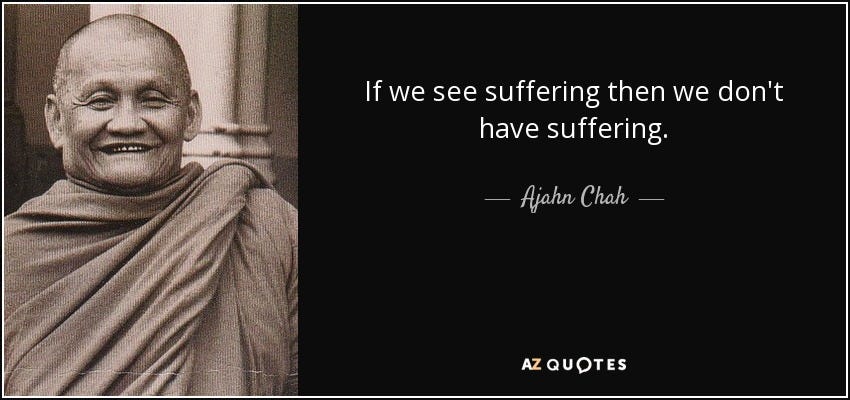
As this is learned, a person begins to notice that “suffering” becomes less simply because it is no longer being fed so much trashy dramatic narrative.
I believe that the idea that others are also versions of you, is especially powerful. I don’t mean everyone is literally the same in a simplistic way.
It means they carry hopes, dreams, and have longings that drive them just as we do. They carry the same fear of being hurt, and the desires to matter more towards their goals and objectives. Such recognition can become one of the deepest upgrades, because it shifts the meditating Observer from practicing an inward escape into relational wisdom.
Breath as devotion
In spiritual terms, breath is more than a body function. It is a current of life. A rhythm, like your heartbeat. It requires no effort normally, but when you take on effort it serves to manipulate the other body mechanisms that use it to regulate.
The easiest way to enter a Now presence, is often simply to follow the breath until the mind remembers it does not need to command everything. It pulls out of the imagination and into the moment.
You aren’t worshiping a breath, you are Observing it just as your body does. You are allowing it to teach you pace, surrender, and trust. When done gently, this can feel less like effort and more like leading your body into a pattern of releasing anxiety and churn.
This is also why over-effort can be a problem. If the breath becomes something you try to conquer, the body may resist (mechanically). But if the breath becomes something you guide then a meditation tends to open more naturally.
Centers, rising, and opening
Chakras fit naturally in this half of the article because they are already part of the symbolic language many readers use to describe their inner body movement. In this framing, the chakra is not just a places in the body. They are there to imagine how energy moves through the doors, thresholds, or knots of experience they can guide. To work with them is to work with the emotional and spiritual textures of being alive.
Guru’s describe sensations of rising, clearing, opening, or subtle kundalini movements. To some that might makes it feel like a biological trick but i have categorized it as a inner response. The key is still going to be: AVOID FORCING it.
The spiritual path tends to reward receptivity more than strain.
Insight and discernment
People often come to meditation hoping for insight, and sometimes they do receive it. But insight is not always fantastic, and not every intense internal experience deserves the same level of trust. A good rule is that real insight usually leaves you more grounded, more compassionate, and less inflated.
That is part of why the journey can feel humbling. The deeper you go, the less interested you become in performance. You start wanting truth more than spectacle. And truth, more often than not, is quiet.
Perhaps i will write an article that touches on how insight crosses into spiritual psychosis without us being aware. This is a danger, but for now, there is no need to couple it as an out come to meditation (generally).
Closing
Meditation is not a way to bypass pain, fear, regret, or anger. It is a way to stop avoiding it long enough to discover what those emotions are informing you. Sometimes the information is peace. Sometimes it feels like grief. Sometimes it feels like finally taking a breath you have been holding for years, and crying until you laugh.
There is no wrong way to do reach those goals. Efficient? Sure, but not wrong.
Meditating should matter to each of us more than it does. It allows us to be more available to live in life. Which in the end, may be what peace is: a body and mind that no longer has to fight anyone’s reality, in order to survive.
Resources:
App: The Way (Enjoy 12 Free Guided Meditation Sessions, no credit card required!)
Spotify of Alan Watts’ “Listen, Dream” (How i learned to successfully meditate. -js)
Dan Harris:
A Monk’s Beginner guide:
Alan Watts:
Yes. It was me who added the emojis and double dashes. Not AI. -js