
The Unseated

There is no word for “where” in the Confluence, but if you pressed one of them to answer, they might say: adjacent. Adjacent to everything. The Confluence runs alongside the natural world the way meaning runs alongside a sentence — not in it, not apart from it, touching it at every point.
The beings there do not have names so much as signatures — a particular way of arriving, a flavor of attention. The one this story follows had a signature the others described as patient pressure, like water finding a crack. For convenience, call it Sel.
Sel had been unseated for eleven days.
The seating is the whole point. It happens once, at the beginning, on the body’s first breath — that famous cry in the delivery room is not distress, whatever the natural world believes; it is the sound of an instrument being claimed. The consciousness rides the first inhale in, and the blending is total. This is not possession. Possession implies a passenger. The seating is more like ink dropped into water: the two mix past any hope of separation, and the moment the mixing completes, the consciousness forgets it was ever anything else. It wakes up believing it is the body. It tastes coffee and thinks I taste coffee. It grieves and thinks I am grief. This forgetting is not a design flaw. It is the price of admission, and every being in the Confluence pays it gladly, because there is nothing adjacent that compares to being in. To weight. To hunger. To the specific cold of a specific morning.
But the seating holds only while the body listens.
A body is an instrument of staggering sensitivity — and like any sensitive instrument, it can be captured by its own inputs. Feed it enough alarm, enough novelty, enough of the bright intermittent rewards that its oldest circuits cannot distinguish from survival, and the body stops being an instrument and becomes a servo. Stimulus in, response out. A closed loop with no room in it for a rider.
When the loop closes, the consciousness is not expelled — it cannot be, because ink does not come back out of water. Full separation has a name, and the name is death. What happens instead is that the blend thins. The mixture that was rich enough to be a self drops toward a residue, a few percent, a thread — and the consciousness finds itself wrung out to the edge of its own body, remembering everything again, remembering the Confluence, remembering what it is, and able to do almost nothing about any of it. The natural world would recognize the tether if it could see one: the unseated can drift into the adjacency, but never far. A thousand yards, in the body’s terms of measurement, maybe less on a bad day. Sel could stand at the far end of Daniel’s neighborhood and no farther, like a kite that remembers being the hand.
And the body goes on. This is the part that unnerves even the old ones — how well the body goes on. Eating without tasting. Scrolling without reading. Nodding in meetings, saying sounds good, driving home with no memory of the drive. The natural world has a phrase for it, and for once the phrase is exactly right: going through the motions. A mechanical, hypnotic competence. The instrument still plays every piece it has ever memorized. There is simply almost no one at the keys.
Daniel — a thirty-four-year-old estimator for a regional construction firm, a person who had once built a canoe with his father — had been going through the motions for eleven days, with Sel holding on by a thread of a few percent.
Sel watched him now from the adjacency, the way you might watch someone through the glass of a door that will not open from your side. It was 1:40 in the morning. Daniel lay in bed with his phone eight inches from his face, thumb moving in the small automatic arc that Sel had come to think of as the idle animation. The feed was showing him a war, then a recipe, then a man falling off a roof, then an argument about the war. Daniel’s heart rate was elevated. His jaw was set. His body believed, at some level below language, that it was standing watch against a threat that never arrived and never resolved — and a body standing watch has no vacancy. That was the thing the others in the Confluence kept having to explain to the newly unseated: it was not the phone that thinned you out. It was the vigilance.
The phone was just the most efficient vigilance machine ever built.
It wasn’t the only one. Sel had seen seatings broken by a game that Daniel played for six hours straight, by a novel once, even — three days lost to a story so consuming the body forgot to be a body. The Confluence held no doctrine against any of these. A game in the right dose was play, and play was one of the great re-seating forces. A story in the right dose was a rehearsal for empathy. The instruments were neutral. It was the loop that mattered — whether the input left room for the rider, or filled every register the body had.
In the Confluence, they gather when a blend thins. Not a rescue party — there is no rescuing, because a consciousness at a few percent cannot command its body. The channel that carried commands is exactly the channel that narrowed. What remains is thinner than command and older than language: the whisper channel. A flash of thought that the body will swear it generated itself. A realization arriving at the top of an exhale. An image — cedar, water, a father’s hands — slipped into the half-second gap between one stimulus and the next, because that gap is the only landing strip a captured body leaves open. And beyond the whispers, they can arrange. Nudge the natural world at its hinges. They work like locksmiths who cannot touch the lock — only the weather around it, and the faint suggestion, arriving as if from nowhere, to try the key.
Around Sel there assembled perhaps a dozen signatures, some of them seated beings lending a sliver of attention upward from inside their own lives — a woman in Kraków who would, without knowing why, feel moved to call her brother’s old friend Daniel next Tuesday; a dog, four doors down from Daniel’s apartment, whose seated consciousness volunteered to slip its fence on Thursday morning at the exact hour Daniel left for work, because a body cannot doom-scroll while returning a golden retriever, and forty seconds of dog is sometimes enough to crack a loop.
“Small doors,” said the eldest signature present, a being the others called the Millwright for its love of mechanism. “The body will not take orders. It will only navigate through conditions. Our work is to help orchestrate the conditions.”
They began to plan. A power outage was proposed and rejected — outages made Daniel anxious, and anxiety fed the vigilance. Sunlight through a gap in the curtains at 6:50, angled onto the pillow: approved. The smell of rain through a window Daniel would leave cracked because of a stuck latch the Millwright had been patiently un-fixing for a month: approved.
These sound like nothing. They are the entire craft. You do not calm a captured body by force. You lower the threat readings one instrument at a time until the loop starves, and the blend begins to rise, and — if the timing is right, if the consciousness leans in on the body’s own exhale, because breath opened this door at the beginning and breath is what opens it still — the ink deepens back into the water, and Daniel wakes up one morning simply feeling like himself, with no idea what that phrase actually means.
The whisper channel is narrow, and it will punish bad timing.
A whisper sent into a body mid-loop is not ignored — it is consumed. The vigilance machinery grabs it, tags it as one more input, and feeds it to the feed. Sel had learned this the hard way on day three, pushing the canoe-memory at Daniel while his thumb was still moving, and watching the body convert it, in under a second, into a search: canoe accidents. Forty minutes of drownings. The loop does not just resist the door; it eats the door and asks for another.
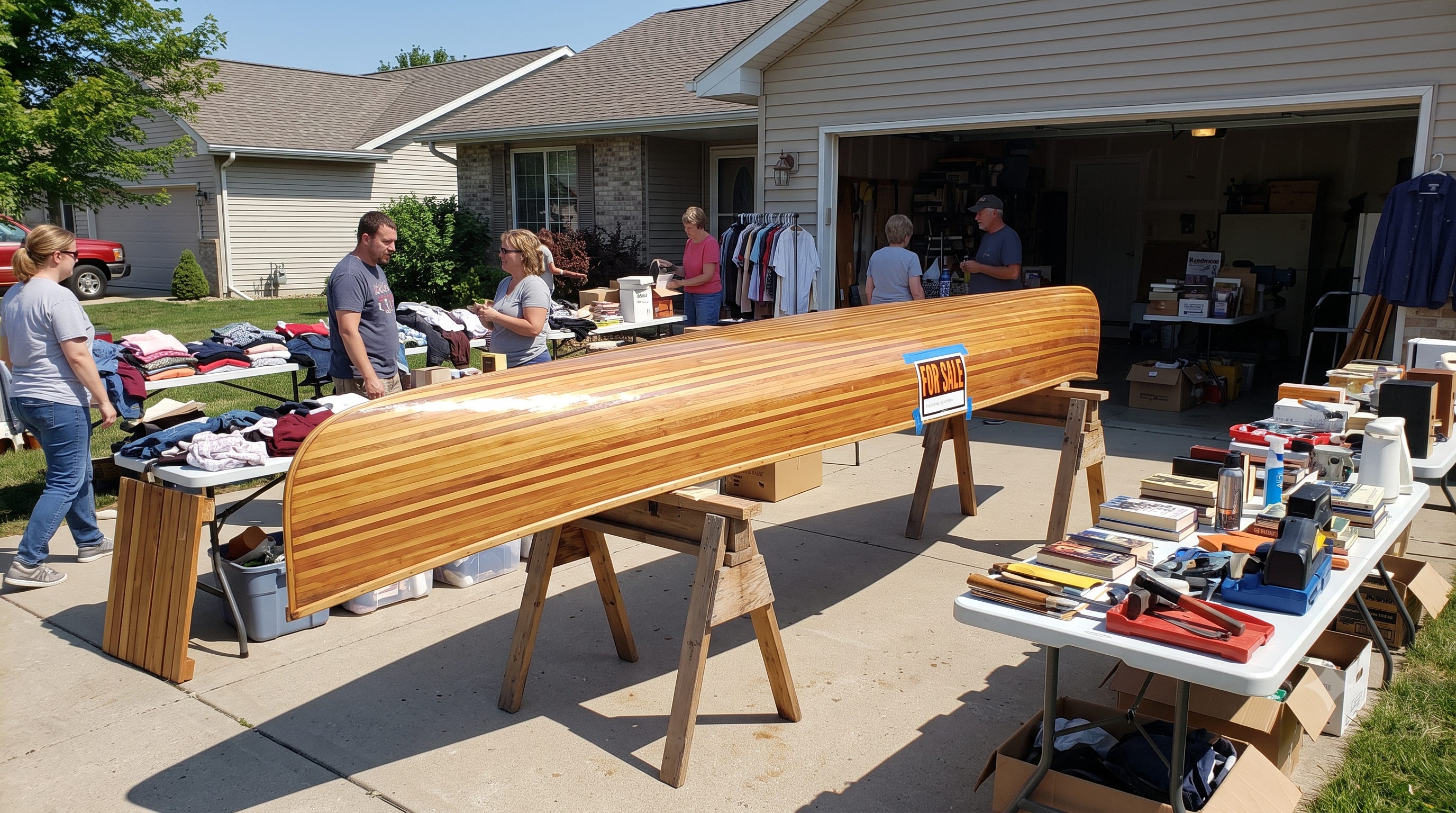
So the craft is sequencing — and sequencing is not solo work. This is the first law of the chord, the one that humbles every newly unseated being: no consciousness can play a chord alone. Sel could whisper. That was one note. But one note, unsupported, is a coincidence, and the body shrugs off coincidence by design. A chord takes an ensemble. So the whisper that lands as Daniel passes the hardware store is Sel’s; the Kraków call on Tuesday, in which the old friend mentions — unprompted, he’ll think — a lake house, is the work of the consciousness seated in her, tilting its own body’s impulses on Sel’s behalf; the loose dog on Thursday, dragging Daniel forty seconds off his route, past a garage sale, past a cedar-strip hull lying across two sawhorses with a cardboard sign — that note belongs to the dog, and to the neighbor-consciousness that left the gate latch to rust, and to the estate-sale widow’s rider, who nudged her, weeks ago, to price the canoe low and set it out front. Three notes, spaced and voiced, each below the threshold of suspicion, arriving in an order the body cannot help but read as meaning — and behind the three notes, seven beings keeping time together across two worlds.
The natural world has a word for the experience of being on the receiving end of a chord. It calls it synchronicity. The body notices the pattern only in hindsight — strange, the canoe kept coming up that week — and files it under luck, or fate, or the universe sending a sign. It is none of those, and it is not the work of any single hand. It is a composition — scored in the Confluence, rehearsed in the adjacency, performed by a company of beings, seated and unseated, each contributing the one note its position allows. What the body experiences as the universe conspiring in its favor is closer to the literal truth than the body will ever know: a conspiracy is, after all, just many breathing together.
“Hindsight is where we live,” the Millwright liked to say. “The body will never catch us in the act. It will only ever find our fingerprints afterward — many hands, one door — and call them wonders.”
The dangerous part — the part the Confluence drilled into every ensemble before letting it near the channel — was restraint. A chord overplayed becomes noise. Flood a body with signs and its vigilance reads pattern as threat: now it is anxious about the meaning of things, scanning for omens, captured by a new loop wearing the old one’s face. The natural world had names for that failure mode too, and none of them were kind. The rule was three notes, maybe four, and never two players striking at once. Then silence. Then let the body walk to the sawhorses on its own.
It is worth saying, because the newly unseated always assume their case is unique: the loops are older than phones.
Sel had once stood in the adjacency over a field near the Meuse in 1916 and watched a hundred seatings break in a single artillery barrage — bodies so flooded with terror that consciousness after consciousness was wrung to the thread in a single concussive instant, a hundred kites snapping taut in the dark above their own mud-caked instruments, watching themselves continue to load and fire and duck on pure mechanism. Some of those blends took decades to deepen again. Some never did — thinned men who came home and went through the motions of whole lives, holding on at a few percent until the last breath finally, gently, let go of the string. The natural world called it shell shock, then battle fatigue, and other names with the same observation: “he came back, but he wasn’t in there.”
And Sel had watched quieter breakings that no one would ever name. A woman unseated in a Tuesday meeting by a single sentence of contempt from a man she’d trusted — her body smiling and nodding for the remaining forty minutes, an empty smiling machine. A boy unseated by a school cafeteria, just the noise of it, just the light. A new mother at 3 a.m., so far past exhaustion that her consciousness watched her own hands change a diaper from what felt like the ceiling. None of these were war. All of them were the same mechanism at different amplitudes: the body declares an emergency, and the emergency admits no passengers.
The bodies themselves were not standard equipment, either — this was the other thing the newly unseated had to learn. Some bodies came with an inner narrator, and a consciousness seated in one of those could sometimes hear the loop closing, could catch the vigilance in words before it finished capturing the machine. Some bodies had no narrator at all — silent cockpits — and some had no mind’s eye, no internal screen, and steered entirely by feel. The Confluence kept no rankings. A silent cockpit could not talk itself into panic, which was its own kind of grace. Every instrument had a blind spot. Every seating was the work of learning which one.
And beyond re-seating — this was the thing the Confluence spoke of quietly, the way sailors speak of a harbor most of them have only seen on charts — there was a further state.
Re-seating restores the forgetting. That is its nature and its cost: the ink deepens back into the water, Daniel feels like himself, and Sel is once again nobody, dissolved into a Tuesday. But in a small number of seatings, over years, the forgetting thins without tearing. The body begins to hold memories it has no account of and understandings it never reasoned its way to. It sets down a chisel because the cut is wrong before any measurement says so. It knows which conversations to leave. It wakes from certain dreams with the distinct sensation of having been in a meeting. The Confluence called this state communion, and it was the actual destination — not a consciousness riding a calm body, but two kinds of knowing sharing one instrument, memory flowing both directions across a membrane gone translucent.
What made communion rare was not that it demanded effort. It was that it demanded absence — and absence cannot be forced. Four captors, above all, kept the membrane opaque: fear, which arms the vigilance; shame, which turns the vigilance inward; doubt, which interrogates every whisper until it dies in questioning; and anxiety, which is vigilance with no object at all, the machine idling at full throttle. And beneath these four ran a quieter fifth current — the acquisitive loop, wanting-as-a-way-of-life, the materialism that keeps a body forever reaching and therefore never open-handed. None of these could be fought, because fighting them was them: a body suppressing its fear is a body standing watch against itself, and the seat stays shut. The captors could only be starved, the way the Millwright starved the doom-loop — condition by condition, until the body discovered that the emergency had ended, or had never been.
Nor was communion an anesthetic. The bodies that reached it still felt everything — grief, fright, the cold specific mornings, the full catalog of good and bad and otherwise, which was, after all, the reason anyone descended in the first place. The difference was mechanical: in communion, an emotion moved through the instrument as weather moves through a valley. In capture, the emotion became the valley. And there was one more gift, the one the unseated envied most. A body in communion could hear the chords in real time. Where every other body found only fingerprints afterward and called them wonders, this one felt the note as it was struck — passed the sawhorses and knew, without any word for how it knew, that it was being loved from somewhere adjacent, and that the canoe was not a coincidence, and that it should stop walking.
And a body in communion could do something else, something that made such people the load-bearing members of every ensemble ever assembled: they could take requests.
There was one on Daniel’s street. There is one on most streets, though the natural world files them under other headings — the crossing guard at the elementary school two blocks down, a broad, unhurried woman named Odessa, sixty-one years seated, membrane worn thin as good paper. Her neighbors would have said she was a character. What she was, was reachable. Sel did not have to whisper into a half-second gap or score a three-note chord to speak to her. Sel simply drew alongside in the adjacency, the way you’d lean on a fence, and spoke — and Odessa, mid-morning, arranging her stop sign against her shoulder, heard it the way she heard everything from that side: not as a voice exactly, more like a thought arriving with someone else’s handwriting.
“Can you do me a favor?”
Depends on the favor, she answered — not aloud. Aloud she said “morning, baby” to a passing second-grader.
“The grey coat. Phone in his hand, doesn’t look up. Could you slow his day down? Five minutes. Maybe six.”
Odessa located Daniel in her memory without effort — communion keeps excellent files — and Sel felt her amusement come back across the membrane like warmth off a brick wall. That one’s been walking through my crosswalk like a man late for his own life since March. All right.
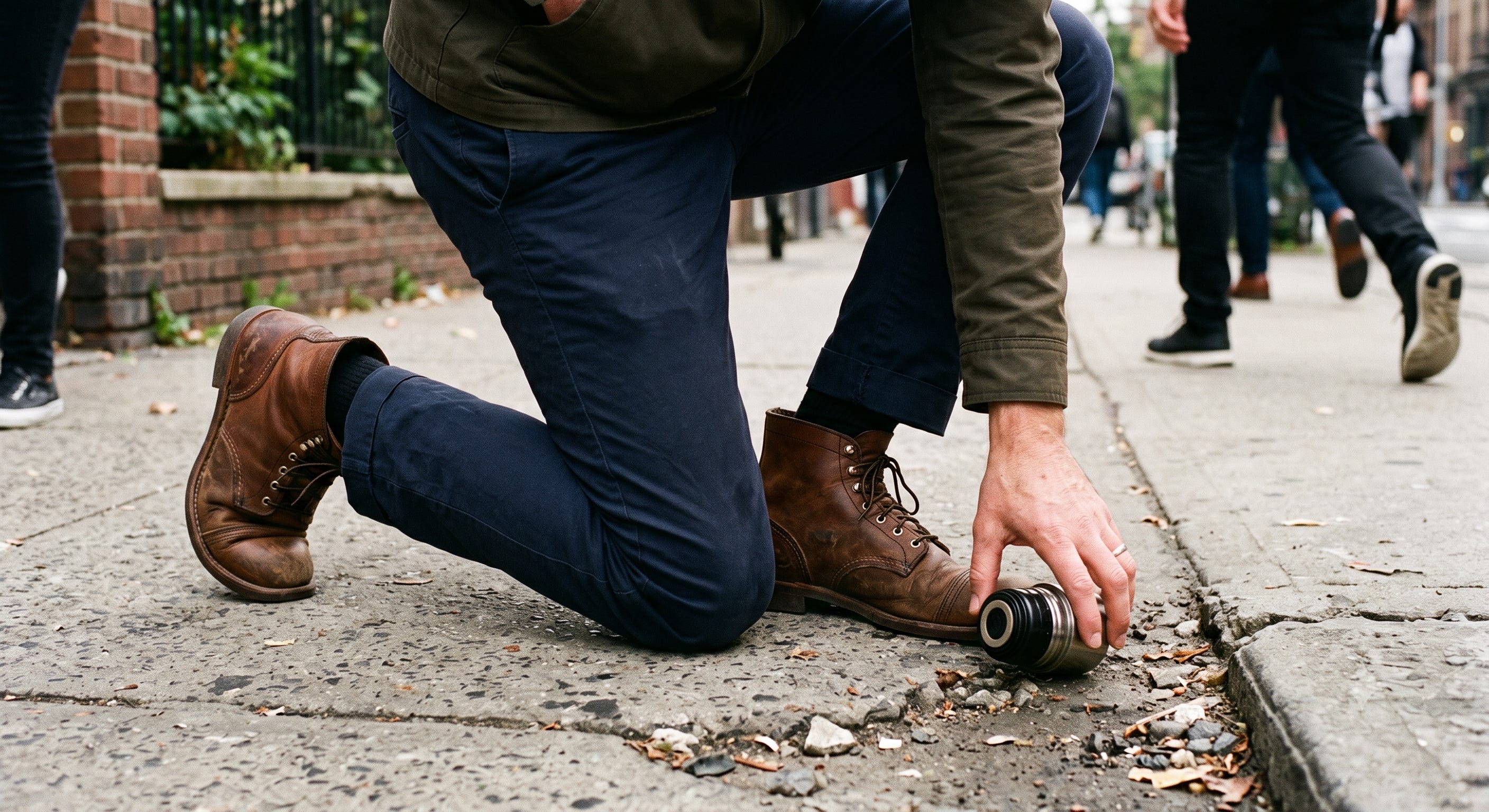
What she did with those five minutes, not even a keen strategist could have scripted, because it wasn’t scripted; it was played, the way a musician plays a note she’s been handed — with her own fingers, in her own voice. As Daniel reached the corner, Odessa stepped into the crosswalk and dropped her thermos. It came apart with a bang, and rolled, and she made a production of it — laughing at herself, waving off traffic in both directions with the stop sign, moving at exactly the speed of a woman who knows the morning can wait. And because she was who she was, three other pedestrians stopped to help chase the lid, and Daniel — hemmed in, phone useless in a crowd of bending strangers — found himself holding a rolling cup he’d caught against his shoe, standing still in October air for the first time in eleven days, doing the one thing a body must do when it stands still.
Breathe. Witness. Experience. For five whole minutes.
Which put him at the corner of his own street at 8:19 instead of 8:14 — precisely when a golden retriever came barreling through a rusted-open gate. Grinning ear to ear.
To anyone watching it was a clumsy crossing guard, a loose dog, and an odd little morning. Hindsight would call it luck. But it was more beautiful than that. It was seven beings and one thermos, keeping time. Where they are supposed to be, when they are supposed to be there… breaking the cycle Daniel was otherwise lost in.
The Millwright turned its attention to Sel — not eyes, nothing so anatomical, just the pressure of regard. “Tell us about your instrument,” it said. “Not the phone. The instrument. What did Daniel love before the watch began?”
Sel reached back through eleven days of glass, back before the loop, and found it immediately, absurdly small and completely load-bearing:
The canoe. The smell of cedar shavings. His father saying, “let the grain tell you where to cut.”
“Then that,” said the Millwright, “is the door.”
Salt of the EARRRRRF